Injury Recovery · Syracuse, NY
The Injury Advice You Grew Up With Is Wrong
Rest it. Ice it. Wrap it. Prop it up. That was the rule for 40 years, and the doctor who wrote it took it back. Here is what we tell patients now, and how we figure out whether your injury is a massage thing, a chiropractic thing, or something you need a doctor for.
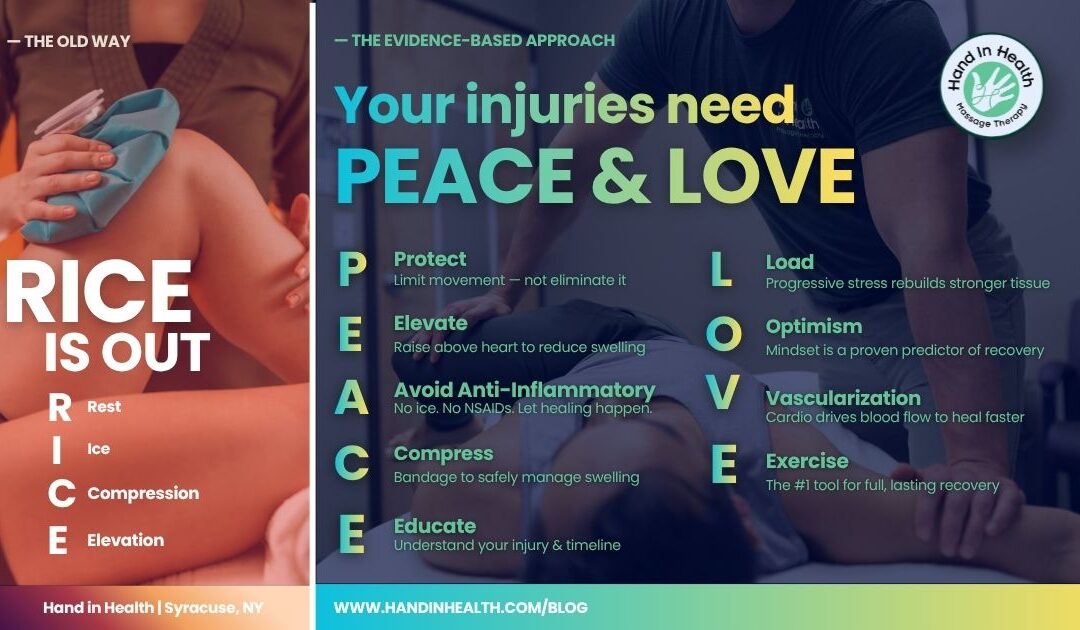
Roll your ankle on an icy Syracuse sidewalk and the advice writes itself. Rest it. Ice it. Wrap it. Elevate it. That is RICE, and most of us learned it before we could drive.
Then the doctor who invented it changed his mind.
Dr. Gabe Mirkin coined RICE back in 1978. In 2014 he publicly walked it back. The research had shifted, and so did he. The two things everyone reaches for first, ice and total rest, can actually slow healing down. Ice numbs the pain, which feels like progress. What it also does is quiet the exact inflammation your body uses to rebuild the tissue.
So what replaced it? A framework called PEACE & LOVE. We use it every day in both of our clinics. Here is what it means in plain English, and how we put it to work.
PEACE: the first three days
The letters are a mouthful. The idea is simple. Protect the injury without shutting it down completely.
- PProtect. Ease off the movements that hurt for a few days. Not the couch for a week. Just back off the sharp stuff.
- EElevate. Prop it above your heart when you can. Simple, and it still works.
- AAvoid anti-inflammatories. Go easy on the ice and the ibuprofen early. Both mute the swelling you actually need in the first days.
- CCompress. A wrap or a sleeve helps manage swelling.
- EEducate. Translation: your body knows how to heal. It does not need to be numbed and immobilized to do the job.
LOVE: after the first 72 hours
Now the job flips. You want blood moving and the tissue working again, gently.
- LLoad. Start using it again, within reason. Movement is medicine here.
- OOptimism. Sounds soft. It is not. People who expect to recover, recover better. That is in the research.
- VVascularization. Get the blood flowing. Easy movement, light cardio, hands-on work.
- EExercise. Rebuild the strength and range so it does not happen again.
Where a clinic like ours fits in
PEACE & LOVE is not a solo project, and this is where having four services under one roof earns its keep. Here is how each one lines up with the healing arc.
- Massage therapy moves fluid, calms the guarding around the injury, and drives blood into the area during the LOVE phase. It is the “vascularization” letter, done by hand.
- Chiropractic sorts out the joints above and below the injury. Roll an ankle and your hip and low back start compensating within days. We catch that before it becomes its own problem.
- Acupuncture helps with pain and swelling without the anti-inflammatories that PEACE tells you to skip. It is a useful tool exactly when you are trying to stay off the ibuprofen.
- Fitness and personal training own the last letters, Load and Exercise. We rebuild the strength so the same ankle, shoulder, or low back does not go again next winter.
Is this even a massage injury?
Here is the part most clinics will not tell you, because most clinics only sell one thing.
Not every injury belongs on a massage table. A real part of our job is knowing the difference. This is a rough guide, not a diagnosis, but it is roughly how we think it through when you call.
A rough guide to who you should see
- Sore, tight, achy, muscular. Pulled something shoveling. Stiff neck from the desk. A low back that seizes up. This is our lane. Massage, and often chiropractic.
- A joint that feels off, stuck, or crunchy. Clicking, locking, one hip sitting higher than the other. Start with chiropractic.
- Pain that lingers, or nerve-type symptoms. Numbness, tingling, or something shooting down a leg or arm. Acupuncture can help, and we may loop in another provider.
Skip us and get seen today
Can’t put weight on it. An obvious deformity. Numbness that won’t quit. Pain that wakes you at night. Swelling that balloons fast. That is not a massage appointment. That is urgent care or your doctor, today. We will tell you that straight, and we would rather you hear it from us than push through it.
When it is not us, we say so. Sometimes that means sending you to a physical therapist or your physician. We would rather point you to the right place than take an appointment we cannot actually help with.
We see the Central New York version of all this
Driveway-shoveling low backs in February. Ankles from black ice in the Wegmans lot. Shoulders wrecked from lugging car seats and hockey bags. Warehouse and nursing shifts that flatten a low back by Thursday. Desk necks that never fully let go. CNY has its own set of injuries, and after 15 years here we know them well.
So the next time something tweaks, don’t let a bag of frozen peas be your whole plan.
Move it gently. Keep the blood flowing. And if it lingers, come see us. We will figure out together whether it is a massage thing, a chiropractic thing, an acupuncture thing, or a go-see-your-doctor thing.
Hurting? Let’s get you moving again.
Book online in under a minute, or give us a call.
Book an appointment
Hand in Health · Syracuse, NY
office@handinhealth.com · handinhealth.com
Mon to Fri 8am to 8pm · Sat and Sun 8am to 6pm
Feel Good, Live Better
This article is general information, not medical advice. If you think you are seriously hurt, see a doctor.