
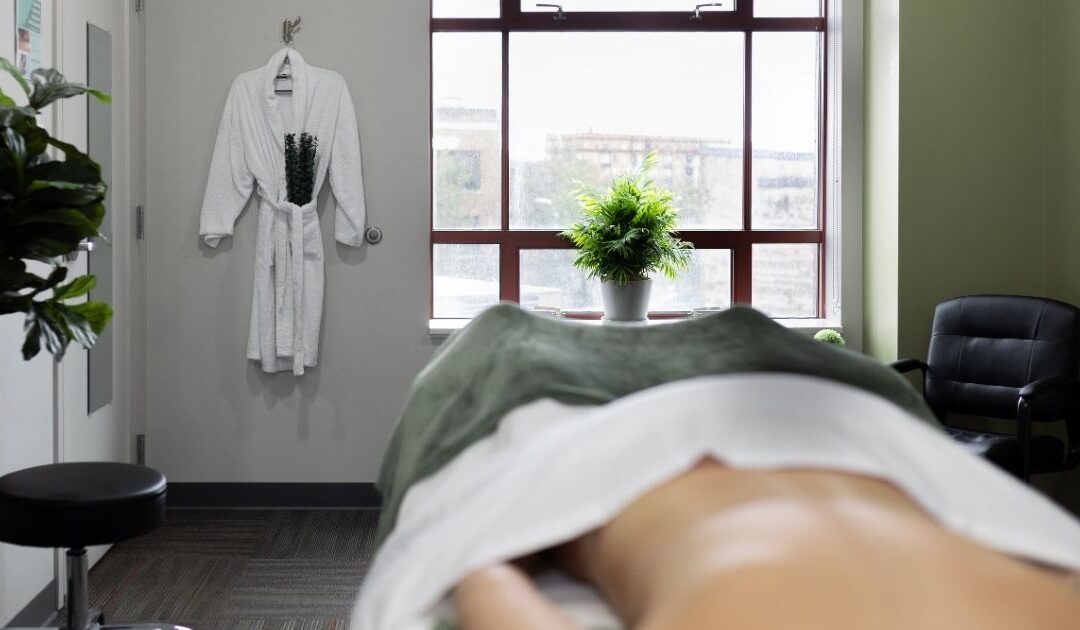
Can massage help your mental health? Research suggests massage therapy may ease stress, and it has been linked to fewer depressive symptoms. Acupuncture and exercise have research behind them too. None of these replace therapy or medication. They work best as supports alongside the mental health care you already have.
Key Takeaways
- A published meta-analysis linked massage therapy to reduced depressive symptoms. Many patients also find it eases stress.
- Acupuncture has been studied for depression and anxiety. A 2024 project in Frontiers in Neurology reported better mental health scores alongside pain relief.
- Chiropractic care is not a mental health treatment. Many patients find it eases the physical tension that often comes with stress.
- Exercise is linked to reduced depressive symptoms, according to a 2023 meta-analysis in the British Journal of Sports Medicine.
- None of these replace therapy or medication. They complement conventional mental health care by supporting the body’s side of stress, anxiety and low mood.
What Does Current Research Say About Massage and Mental Health?
Research supports massage, acupuncture and exercise as helpful additions to mental health care, not substitutes for it. For years, the public conversation about mental health has centered on two things. A therapist and a prescription. Both are vital. Both save lives.
Many people also notice that stress and anxiety show up in the body. Tight shoulders. A clenched jaw. Shallow breathing. Poor sleep. Newer research looks at whether caring for the body can support how people feel. The results so far are encouraging, but still developing.
Below is what the studies say, what they don’t say, and what we see at our Syracuse, NY clinic.
How Are Stress and the Body Connected?
Your nervous system runs your stress response, and it reaches every part of your body. When you feel under threat, it shifts into fight-or-flight mode. Your heart rate rises. Your muscles brace. Your breathing gets quicker and higher in the chest.
That response is useful in short bursts. When stress drags on, many people stay braced for weeks or months. They carry it as neck and shoulder tension, headaches or trouble winding down at night.
The other side of the nervous system handles rest and recovery. Researchers often call it “rest and digest.” Many patients find that easing physical tension helps them feel calmer. That is the part of mental health care body-based therapies aim to support.
Massage Therapy: Support for an Overworked Nervous System
Massage therapy has been linked to reduced depressive symptoms in published research. A meta-analysis of 17 randomized controlled trials in The Journal of Clinical Psychiatry found massage was associated with fewer depressive symptoms. It is not a replacement for mental health care, but it can be a helpful addition.
Researchers think massage may shift the nervous system toward its rest-and-recover mode. Many patients notice their breathing slow and their muscles let go during a session.
People who carry stress as muscle tension often describe the change plainly. They come in tight. They leave looser and calmer. A therapeutic massage is built around what you need that day, from lighter pressure for relaxation to focused work on problem areas.
Our massage therapists don’t diagnose medical or mental health conditions. They do pay close attention to how your body responds, and they adjust the session as they go.
Acupuncture: Turning Down the Stress Response
Acupuncture has been studied for depression and anxiety, and early results are promising. The 2024 Alberta Complementary Health Integration Project, published in Frontiers in Neurology, followed 500 people who completed at least six sessions. It reported improvements in mental health, sleep and pain measures. It was an observational project, not a controlled trial, and the results were self-reported.
A separate 2024 systematic review in Frontiers in Neuroscience looked at 20 randomized trials of acupuncture used on its own for depression. All of the trials took place in China. The authors reported improved depression scores with few side effects, and they called for more research.
Acupuncture may help calm the body’s stress response. It is not a replacement for psychiatric care. It is a different tool, and research on it continues. Annette Burden, L.Ac., provides acupuncture at Hand in Health.
Chiropractic Care: Easing the Physical Side of Stress
Chiropractic care is not a mental health treatment. What it can do is address the physical tension that often travels with stress.
Stress tends to show up in posture. Tight upper traps. A forward head. A locked jaw. Stiffness through the mid-back. Many patients find that working on joint movement and muscle tension helps their body feel more comfortable.
Dr. Andrew Koh, DC, provides chiropractic care at our clinic. A first visit takes about 45 minutes. Follow-up visits take about 20 minutes. For patients dealing with stress on top of physical pain, chiropractic care can be one part of a broader plan.
Exercise: The Support Hiding in Plain Sight
Exercise is linked to reduced depressive symptoms, according to a 2023 meta-analysis in the British Journal of Sports Medicine. Consistent movement tends to matter most.
Most people already know exercise is good for them. The hard part is doing it week after week. Structure and accountability help.
That is why we built fitness into our practice. The first step is a no-charge fitness consultation with one of our personal trainers. From there, you can choose a training package. Our trainers focus on movement, strength and consistency. They aren’t mental health providers.
Why Do We Offer All Four Under One Roof?
We offer massage, acupuncture, chiropractic care and personal training together because bodies don’t stay in one lane. Stress can show up as muscle tension one month and poor sleep the next. Having several licensed providers in one place makes it easier to adjust your care as things change.
If you are working with a therapist, please keep going. If you are on medication, please keep taking it as prescribed. None of what we offer is a replacement for psychiatric care.
What we can offer is steady, ongoing support for the physical side of stress. A steady time to let your body settle. Providers who pay attention to whether you actually feel better. That is the work we do every week, and it is why our patients have left more than 2,000 5-star reviews across all platforms.
Frequently Asked Questions
Can massage therapy help with stress and low mood?
Many patients find that it helps. A meta-analysis of 17 randomized controlled trials in The Journal of Clinical Psychiatry found massage therapy was associated with reduced depressive symptoms. Massage is not a replacement for mental health care, but it can be a helpful addition. Learn more about our massage therapy services.
How many acupuncture sessions do studies use?
Studies on acupuncture for mood and sleep usually look at a series of sessions, not a single visit. The 2024 Alberta project in Frontiers in Neurology included people who completed at least six sessions, and it reported better mental health and sleep scores. Your acupuncturist will suggest a plan that fits your goals and schedule.
Can chiropractic care help with stress?
Chiropractic care is not a treatment for stress or anxiety. Many patients find it helps ease the physical tension that often comes with stress, such as tight shoulders, neck stiffness and mid-back discomfort. It can be a useful part of a broader plan, alongside the mental health care you already receive from your own providers.
How much exercise do I need for mental health benefits?
There is no single number, but consistency matters most. A 2023 meta-analysis in the British Journal of Sports Medicine linked exercise to reduced depressive symptoms. U.S. physical activity guidelines recommend at least 150 minutes a week of moderate activity for adults. A no-charge fitness consultation is a simple way to get started.
Should I use these therapies instead of medication or therapy?
No. Massage, acupuncture, chiropractic care and exercise are complementary supports, not replacements for psychiatric care. If you are working with a therapist or taking prescribed medication, please continue. These body-based therapies work best alongside conventional mental health treatment, by supporting the physical side of stress.
Where can I book massage, acupuncture or chiropractic care in Syracuse?
You can book at our Syracuse, NY clinic. We’re open Monday through Friday, 8 a.m. to 8 p.m., and weekends, 8 a.m. to 6 p.m. The easiest way to book is the Hand in Health app. You can also book online or text us at 315-937-2300.
Book a Visit
Book a massage, acupuncture visit, chiropractic visit or fitness consultation at our Syracuse, NY clinic. New patients are welcome, and we accept HSA/FSA cards.
The easiest way to book is the Hand in Health app, on the App Store or Google Play. You can also book online or text us at 315-937-2300. Booking ahead is the best way to get your preferred time, but check the app for last-minute openings from cancellations.
This article is for informational purposes only and is not a substitute for medical, psychiatric or psychological care. If you are experiencing a mental health crisis, call or text 988 to reach the Suicide and Crisis Lifeline.
References
- Hou, W. H., Chiang, P. T., Hsu, T. Y., Chiu, S. Y., & Yen, Y. C. (2010). Treatment effects of massage therapy in depressed people: a meta-analysis. The Journal of Clinical Psychiatry.
- Lu, M., et al. (2024). Effectiveness of acupuncture in treating patients with pain and mental health concerns: the results of the Alberta Complementary Health Integration Project. Frontiers in Neurology, 15, 1366685.
- Tan, Y., Duan, R., & Wen, C. (2024). Efficacy of acupuncture for depression: a systematic review and meta-analysis. Frontiers in Neuroscience.
- Heissel, A., et al. (2023). Exercise as medicine for depressive symptoms? A systematic review and meta-analysis with meta-regression. British Journal of Sports Medicine, 57(16), 1049 to 1057.