
Acupuncture has been practiced for thousands of years and is a cornerstone of Traditional Chinese Medicine (TCM). Today, it is embraced globally for its health benefits, providing relief for various physical and emotional conditions. But how do you know if acupuncture is right for you? At Hand in Health Massage Therapy, we specialize in a holistic, collaborative approach to wellness, offering services such as massage therapy, chiropractic, acupuncture, and fitness. If you’re considering seeing an Acupuncturist, this blog will help you understand the common reasons people seek treatment, what to expect during a session, and how it aligns with other therapeutic practices like massage.
Are you located in the Greater Syracuse, NY area and interested in Acupuncture? We invite you to book a treatment with our Licensed Acupuncturist, Annette Burden. Your Initial Acupuncture Consultation and Treatment will last about 60-75 minutes. Book your treatment online or contact our Syracuse, NY clinic today.
Common Reasons People Seek an Acupuncturist
People come to an Acupuncturist for a wide range of health concerns, many of which stem from both physical and emotional roots. Below are some of the most common reasons individuals seek acupuncture treatment.
1. Pain Management
Chronic pain is one of the most common reasons for seeking acupuncture. Whether it’s lower back pain, neck pain, headaches, or arthritis, acupuncture may help ease pain and promote circulation. Research has looked at acupuncture for conditions like osteoarthritis and migraines.
2. Stress
Modern life comes with its share of stressors, and many people find acupuncture helps them relax and manage everyday stress. Many people feel an immediate sense of calm following their treatment.
3. Sleep
For those who struggle with falling or staying asleep, many people find that acupuncture helps them relax and rest more easily.
What Happens During a Typical Acupuncture Treatment?
If you’ve never experienced acupuncture, you might be curious—and perhaps a little nervous—about what happens during a session. Here’s a step-by-step guide to what you can expect:
1. Consultation and Assessment
Your first visit will start with a consultation. The acupuncturist will ask about your health history, any current issues, and what you hope to achieve from acupuncture. They’ll also assess your pulse, tongue, and other physical indicators to form a complete picture of your health, following the principles of Traditional Chinese Medicine.
2. Acupuncturist Treatment
Once the assessment is complete, the acupuncturist will choose specific points on your body to target. These points correspond to pathways called meridians through which energy, or Qi, flows. Fine, sterile needles are then inserted into the skin. The needles are much thinner than those used for injections, and most people feel only a slight pinch or tingling sensation upon insertion.
The number of needles and where they’re placed will depend on your specific condition. You’ll lie still and relax for 20-30 minutes as the needles do their work. The setting is calm and peaceful, often with dim lighting and soothing music to help you relax.
3. Relaxation and Healing
Many people find the treatment deeply relaxing. It’s common to feel a sense of heaviness, warmth, or even a tingling sensation around the needle sites. These sensations are signs that your Qi is being stimulated and moving through the body.
Once the session is over, the needles are gently removed, and you may be given further advice on self-care, diet, or exercises to maintain the benefits of the treatment.

How People Feel After a Treatment
After your first acupuncture session, you may feel an immediate sense of calm and well-being. Some people experience what is known as an “acupuncture high,” which can feel like a relaxed, euphoric state. Physically, you might notice reduced tension in areas of pain or discomfort.
Immediate After-Effects
It’s also common to feel slightly tired or lightheaded after treatment. This is your body adjusting to the shift in energy flow, and it usually subsides within a few hours. Acupuncturists often recommend taking it easy for the rest of the day and drinking plenty of water.
Long-Term Benefits of continually seeing an Acupuncturist
Acupuncture’s benefits often build over time. While some people feel relief after just one session, most conditions—especially chronic ones—require multiple treatments to see long-lasting results. Regular sessions can support continued relief. Over time, many people notice more energy and a better mood.
How Often Should You See an Acupuncturist?
The frequency of acupuncture treatments depends on the nature and severity of your condition. For acute issues like a recent injury or tension headaches, you may benefit from weekly or bi-weekly sessions for the first month or so. Chronic concerns like long-term pain may require more consistent treatments over a longer period.
Once your symptoms start improving, your acupuncturist may suggest tapering off treatments to every two weeks or monthly for maintenance. Some people incorporate acupuncture into their routine as a preventive measure, just as you might with ongoing massage or chiropractic care.
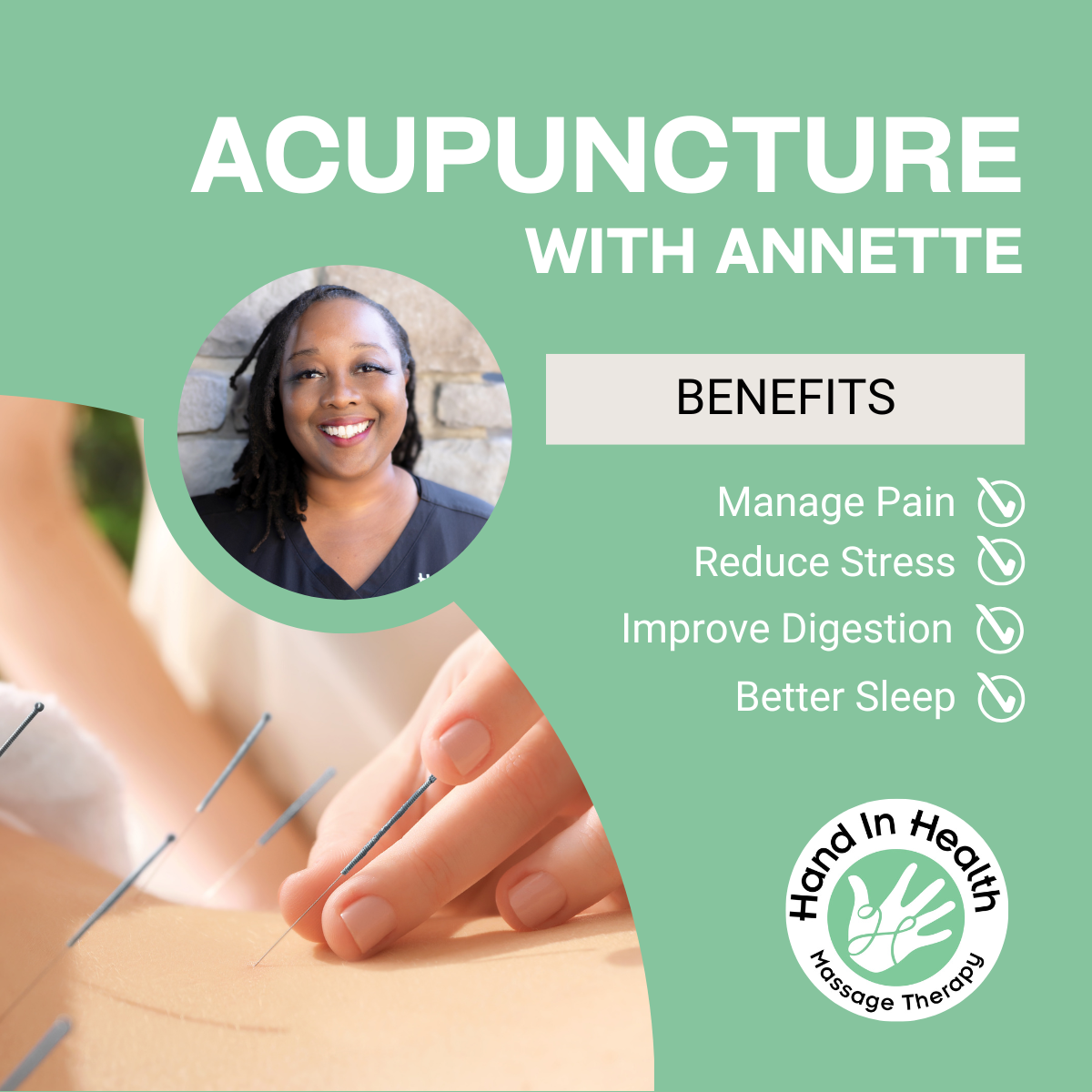
Health Benefits of seeing an Acupuncturist
1. Pain Relief
The most well-known benefit of acupuncture is pain relief. Whether you’re dealing with chronic conditions like arthritis or muscle tension from sitting at a desk all day, acupuncture may help ease discomfort and improve circulation.
2. Stress Reduction
Acupuncture may help calm the body’s stress response by encouraging the parasympathetic nervous system, also known as the body’s “rest and digest” mode. This makes it a helpful tool for managing everyday stress.
3. Improved Sleep
Better sleep is a common side effect of acupuncture. By calming the nervous system and balancing the body’s energy, acupuncture may help you sleep more soundly.
How Acupuncture and Massage Therapy Align Together
At Hand in Health Massage Therapy, we believe in a holistic, integrative approach to wellness, which is why we offer acupuncture alongside massage, chiropractic, and fitness services. These therapies complement each other beautifully, providing comprehensive care for the body and mind.
1. Combining an Acupuncturist and Massage Therapist for Pain Relief
Massage therapy and acupuncture are both popular choices for musculoskeletal pain. While massage therapy works on the muscles, fascia, and soft tissues, acupuncture targets the body’s energy pathways and nervous system. When combined, these therapies can help ease pain and muscle tension.
2. Enhanced Relaxation and Stress Relief
Both acupuncture and massage help stimulate the body’s relaxation response, reducing stress. Acupuncture can calm the nervous system, while massage eases muscle tension and promotes circulation. Together, they provide a holistic approach to stress relief, promoting both physical and emotional balance.

Should You See an Acupuncturist?
Acupuncture is a time-tested therapy that many people use for pain, stress, and better rest. Whether you’re dealing with a specific condition or simply want to enhance your overall well-being, acupuncture may be the perfect addition to your self-care routine.
At Hand in Health Massage Therapy, we take pride in offering acupuncture as part of our collaborative wellness center. Whether combined with massage therapy, chiropractic care, or fitness services, acupuncture can help you Feel Good, Live Better. If you’re ready to experience the benefits of acupuncture for yourself, contact us today to schedule an appointment. Learn more about acupuncture at Hand in Health, with convenient appointment times at our Syracuse, NY clinic. Book an appointment today!

Sources:
- National Center for Complementary and Integrative Health (NCCIH) – This source provided detailed research-backed information on acupuncture’s effectiveness for various health conditions, including pain management, stress relief, and respiratory health. NCCIH
- Verywell Health – This article outlined what to expect during acupuncture treatments, its potential health benefits, and side effects. It provided a comprehensive view of the different techniques used in acupuncture, like electroacupuncture and cupping. Verywell Health
- ProHealth – This source delved into how acupuncture and massage therapy complement each other as holistic healing modalities, particularly their role in stress reduction and promoting overall wellness. It also explored how both treatments help in managing chronic pain and improving quality of life. ProHealth.com.