Deep Tissue Massage in Syracuse, NY
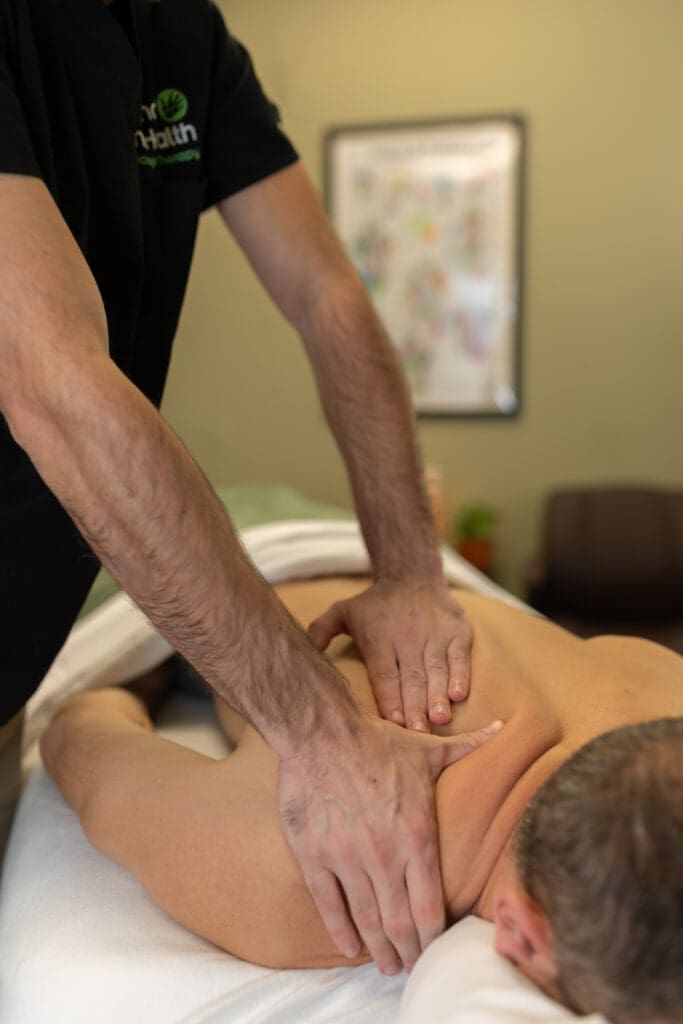
Deep tissue massage is a slow, firm massage that sinks into the deeper layers of muscle and connective tissue to work on stubborn knots and chronic tension. At Hand in Health in Syracuse, NY, every licensed massage therapist is trained in deep tissue massage, and you stay in control of the pressure the whole time. Sessions run 30 to 120 minutes, and HSA and FSA cards are accepted.
Often booked for: back, neck and shoulder tension, stubborn knots, strain from desk work or physical jobs, recovery from training, and chronic back pain.

Book an Appointment

Pair With Chiropractic

Explore Massage Therapy
Deep Tissue Massage
Slow, Firm Pressure for Knots and Chronic Tension
What Is Deep Tissue Massage?
Deep tissue massage works below the surface. Your therapist warms up the area first, then uses slow, sustained pressure from their forearms, elbows, thumbs and fingers, leaning in with their body weight to sink into the deeper muscles and connective tissue. The pace is slow on purpose, because deep muscles need time to soften before they let go.
Every therapist works a little differently, based on their own body mechanics and what your muscles need that day. The goal is the same: focused, firm work on the areas that feel stuck.
Who Deep Tissue Massage Is For
Deep tissue massage is a good fit if you have had massage before and want deeper, more focused work than a relaxation or Swedish massage. Patients often book it for:
- Back, neck and shoulder tension that a lighter massage can’t reach
- Strain from desk work, driving or physical jobs
- Training and sports recovery
- Chronic back pain and stubborn knots
If it is your first massage, or you mainly want to relax, start with a therapeutic massage and ask your therapist to go deeper where you need it.
How Firm Is Deep Tissue Pressure?
It can feel intense, and a “good hurt” is normal as tight muscles let go. It should never feel sharp or unbearable. We use a 0 to 10 pain scale, and our rule is simple: pressure should never go above a 7. Past that point your body starts guarding, tensing against the pressure, and the session stops making progress.
For a deeper look at good hurt, bad hurt and the signs to speak up, read our guide: Does Deep Tissue Massage Hurt? What to Expect, and How Deep Is Too Deep.
You’re in Control of the Pressure
Deep tissue works best with more conversation than a quiet relaxation massage. Your therapist will check in on pressure during the session, and we want you to speak up too.
- Ask for lighter or deeper pressure at any time.
- Give a number on the pain scale when your therapist asks.
- Point your therapist to the exact spots you want worked, and steer their strokes if something needs more attention.
We don’t know unless you tell us, and we will always adjust.
When to Wait or Choose Something Else
- Workouts and events: don’t book deep tissue right before or right after a hard workout, game or race. Plan it as part of your recovery, on a day your muscles can rest.
- Recent injuries or surgery: tell us when you book, so your therapist can adjust or suggest a different approach.
- Blood thinners: check with your doctor before booking deep pressure work, and tell your therapist at intake.
- Health conditions: your intake form asks about your health history, and your therapist will tell you if a lighter approach is safer for you.
After Your Deep Tissue Massage
You may feel mild soreness for 1 to 2 days, especially if you are new to deep tissue. It should feel like post-workout soreness, never severe pain. Gentle stretching, the exercises your therapist suggests and heat can help with any lingering muscle soreness. If something feels sharp or unusual, let us know so we can adjust next time.
How Long Is a Session and What Does It Cost?
- 30 minutes: $95
- 45 minutes: $115
- 60 minutes: $135
- 75 minutes: $155
- 90 minutes: $170
- 120 minutes: $215
A 30 or 45 minute session suits one area, like your neck and shoulders. Choose 60 to 120 minutes to warm up the tissue and work several areas. We accept HSA and FSA cards and provide superbills on request. Members use their monthly credits and pay the small difference. See our massage memberships.
Your Deep Tissue Therapists
Every licensed massage therapist at Hand in Health is trained in deep tissue massage. Therapists we especially recommend for deep tissue work include Andrew M., Ben, Brian, Hollie, Jason, Josh J., Josh R., Natalie, N’zinga, Pamela, Patti, Phil, Russ, Terry and Walker. You can choose your therapist when you book online.
Deep Tissue vs Therapeutic vs Sports Massage
- Deep tissue: slow, firm, sustained pressure focused on the deeper muscles and the areas that feel stuck.
- Therapeutic: a blend of lighter and firmer techniques, with pressure that changes through the session.
- Sports: built around how you train and compete, and may include assisted stretching.
Not sure which to book? Tell us what you are feeling and what you want from the session, and your therapist will adjust as you go.
Deep Tissue Massage FAQs
How firm is deep tissue massage?
Firm, but you set the limit. A “good hurt” is normal as tight muscles let go, and it should never feel sharp or unbearable. We keep pressure at or below a 7 on a 0 to 10 pain scale. For more, read our guide to whether deep tissue massage hurts.
How much pressure is too much?
Pressure is too much when you hold your breath, tense up, or the feeling turns sharp, burning or electric. Tell your therapist right away. Once your body starts guarding, deeper pressure stops making progress.
Can I ask for lighter or deeper pressure during the session?
Yes, anytime. You are always in charge of the pressure. Ask for lighter or deeper work, give a number on the pain scale, or point your therapist to the exact spots you want worked. We don’t know unless you tell us.
Will I be sore after a deep tissue massage?
You may feel mild soreness for 1 to 2 days, especially if you are new to deep tissue. It should feel like post-workout soreness, never severe pain. Gentle stretching, the exercises your therapist suggests and heat can help with lingering soreness.
Should I get deep tissue massage before or after a workout?
Not right before or right after a hard workout, game or race. Deep tissue works best as part of your recovery plan, on a day your muscles can rest. Share your training or event dates when you book.
Is deep tissue massage good for a first massage?
Deep tissue is usually best for people who have had massage before and want firmer, more focused work. If it is your first massage, or you mainly want to relax, start with a therapeutic massage and ask your therapist to go deeper on the spots that need it.
How much does a deep tissue massage cost?
A 60-minute deep tissue massage is $135. Sessions are $95 for 30 minutes, $115 for 45 minutes, $155 for 75 minutes, $170 for 90 minutes and $215 for 120 minutes.
Can I use my membership for deep tissue massage?
Yes. Members use their monthly credits and pay the small difference. For example, on the 60-minute plan, a 60-minute deep tissue massage uses your 120 credits plus $15.
Can I use my HSA or FSA card for deep tissue massage?
Yes. You can pay for deep tissue massage with an HSA or FSA card, and we provide superbills on request. If you have questions about what your plan covers, ask your plan administrator.
What is your cancellation policy?
We require 24 hours’ notice to cancel or reschedule. Cancellations with less than 24 hours’ notice, or missed appointments, are charged the full cost of the session.
What Our Deep Tissue Patients Say
“I went in today for a deep tissue massage and came out feeling like a new refreshed person. My massage therapist was Hollie and she went above and beyond to make sure I was comfortable and she really worked her magic. I would definitely recommend trying out this place!”
Marisol Estrada, Downtown
“I had a wonderful experience from the beginning to the end. From my initial greeting to the end of my massage. Phillip was so warm and friendly. He did an amazing job addressing all of my issues. He really listened to what I was looking for in a massage and used the right amount of pressure, and made sure I was comfortable throughout the massage. He relieved the tension in my low back, neck and shoulders. Phillip is very skillful and knowledgeable. I left the office feeling relaxed, stress free, pain free, and ready to take on the day.”
Karen Hall, North Syracuse
“My first deep tissue massage experience today at the state tower bldg, downtown syracuse was excellent! Abigail LMT was soft spoken, professional, and pleasant. ..applying a perfect mix of techniques at precisely the right time and location…I look forward to my next appointment with her as well as Dr. Andy for Chiropractic…after several massages over the years, I Highly recommend Abigail to anyone…thanks, Dr. Russ Perez”
Perez Russ, Downtown
“Such a peaceful and calm office. Staff is so nice and helpful. I absolutely love the deep tissue massage with hot stones. If you’re thinking of getting a massage, hand in health is the place to go to in CNY!”
emily candee, North Syracuse
“I had Terence for a 120 min deep tissue massage and cupping. It was excellent ! I felt very comfortable during the massage. The space was clean and quite relaxing. … But otherwise, an amazing experience and I will be coming back !”
Allie Esposito, Downtown
“I’ve had a deep tissue massage and now a couple chiropractic visits. My experiences have been great so far!! Can’t wait for my next monthly massage next week!!”
Laurie Couse, North Syracuse
Read our Google reviews: Downtown Syracuse · North Syracuse
Book Deep Tissue Massage in Syracuse
Firm, focused deep tissue massage with licensed massage therapists, and you stay in control of the pressure. Book online or in the Hand in Health app.
Related reading: Does Deep Tissue Massage Hurt? What to Expect, and How Deep Is Too Deep

Hand in Health Massage Therapy ﹣Downtown Syracuse
109 South Warren St. Ste 301
Syracuse New York 13202
(State Tower)
Contact
Phone: 315-937-5953
Write A Review
Hand in Health Massage Therapy ﹣ North Syracuse
7293 Buckley Rd, Suite 102
North Syracuse, NY 13212
Contact
Phone: 315-937-5954
Email: office@handinhealth.com
Write A Review
Business Hours
Monday: 8:00 AM – 8:00 PM
Tuesday: 8:00 AM – 8:00 PM
Wednesday: 8:00 AM – 8:00 PM
Thursday 8:00 AM – 8:00 PM
Friday: 8:00 AM – 8:00 PM
Saturday: 8:00 AM – 6:00 PM
Sunday: 8:00 AM – 6:00 PM